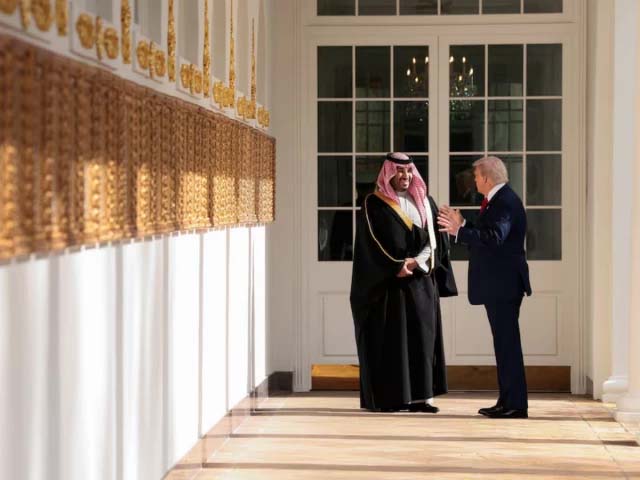
President Donald Trump on Tuesday designated Saudi Arabia as a major non-NATO ally, reviving a decades-old strategic partnership as the two countries signed sweeping agreements on arms sales, civil nuclear cooperation, artificial intelligence, and critical minerals.
The designation signals a return to traditional US-Saudi ties. While it doesn’t provide the mutual defense guarantees enjoyed by NATO members, it grants the kingdom significant economic, military, and defense benefits, a status the US reserves for countries of strategic importance outside the Atlantic alliance. Pakistan received this designation from Bush post 9/11 in 2004.The meeting underscored Trump’s determination to prioritize ties between the world’s biggest economy and its top oil exporter, even as the international outcry over journalist Jamal Khashoggi’s 2018 killing has gradually faded from diplomatic discourse.
Trump said he was “taking our military cooperation to even greater heights” by granting Saudi Arabia the designation, adding that US strikes on Iranian nuclear facilities in June had made the kingdom safer.
Saudi Arabia paid a steep price for the honor, becoming the 20th country on the list. Under a Strategic Defense Agreement that “fortifies deterrence across the Middle East,” Riyadh committed to new burden-sharing funds to offset US costs while making it easier for American defense firms to operate in the kingdom.
The countries also completed negotiations on civil nuclear energy cooperation, which the White House described as the legal foundation for a long-term nuclear energy partnership—a deal that has raised concerns among nonproliferation experts given Saudi Arabia’s previous statements about potentially pursuing nuclear weapons.