

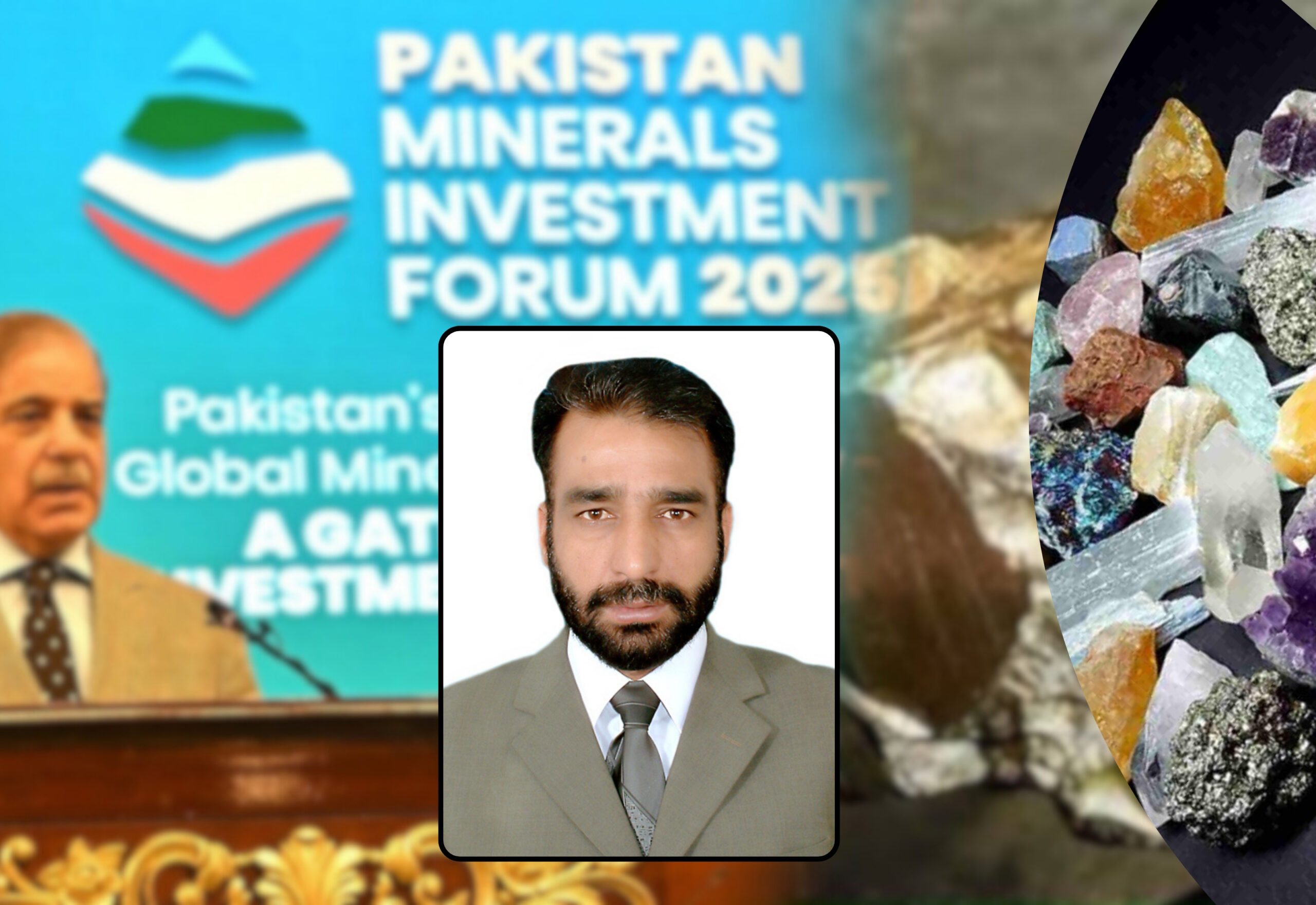
Pakistan is rich in diverse natural resources. Pakistan’s human resources include a population of intelligent young people. Pakistan has an abundance of natural resources. Nature has blessed the country with many types of fossil fuels which if utilized properly can reshape the country and put the country on a path to prosperity.
However, political instability, corruption and lack of law and order in the country has prevented full use of such resources. Here are some of the details of natural resources of Pakistan which are needed to be utilized for the economic boom in the country. Pakistan is one of the richest countries in the world in terms of natural resources but also one of the poorest among them in their management.
The culture, knowledge, wealth, and infrastructure are sure to grow and improve in the near future. This combined with its prime location will lead to long-term success for the nation.
The country is abundant in the vital resources including that of energy, agriculture, minerals, population, and geography, but unlike the developed countries, these have not been properly exploited due to poor management.
This dismayed situation is caused due to several, both chronic and acute, flaws which have led to poor governance of country since its inception except some brief spells of economic prosperity. Prevalent political rivalry and instability, worsening law and order and rampant corruption have catalyzed the situation to resource development impasse.
Contrary to economic potential of its natural resources, Pakistan is depending on foreign aid and debt, it is facing deficit in trade, acute energy crisis to run industry, and water stress for agriculture.
A two-day event by Pakistan Minerals Investment Forum began on April 7th 2025 at the Jinnah Convention Center Islamabad. The event provided a dynamic platform for open debates on policies that will shape the future of the mineral industry. Experts underlined the vast potential of Pakistan’s mineral wealth and emphasized the need for sustainable resource management within the sector.
The forum featured engaging panel discussions, exhibitions and high-level dialogues, all focused on tapping into the immense opportunities of Pakistan’s mineral resources.
Barrick Gold, which holds a 50% stake in the Reko Diq mine, participated in the Pakistan Minerals Investment Forum in Islamabad, a two-day event. Barrick Gold CEO, Mark Bristow, highlighted the project’s potential to transform Pakistan’s mining sector and establish it as a global player. The Reko Diq mine, a joint venture with the Pakistani government and the Baluchistan government, is expected to contribute significantly to Pakistan’s economy, he added.
Barrick Gold is actively involved in the Pakistan Minerals Investment Forum, a platform to attract investment to the country’s mineral sector. Barrick believes the Reko Diq mine, with its 15 million tons of copper reserves and 26 million ounces of gold, will be a pivotal asset for Pakistan, positioning it on the global mining map.
The Reko Diq project is a partnership between Barrick Gold and the Pakistani government, with both the federal and provincial governments holding a significant stake. The forum is a platform for Barrick to showcase the Reko Diq project and attract further investment, including potential partnerships with Saudi Arabian companies like Manara Minerals.
Three major announcements regarding significant mineral and hydrocarbon discoveries were made. The first announcement came from National Resources Limited (NRL), which revealed the discovery of “significant copper-gold mineralisation in Chagai, Balochistan”. Muhammad Ali Tabba, chairman of NRL — a 100 per cent private firm jointly owned by Fatima Fertiliser, Liberty Mills Limited and Lucky Cement — made the announcement.
The company was awarded a lease in October 2023. The licensed area contained two known porphyry prospects with strong exploration potential. Over the past 15 months, NRL identified 18 new prospects. One of these prospects, “Tang Kaur”, has rapidly progressed to an advanced drilling stage, Mr Tabba said.
He said NRL had completed 13 diamond drill holes (3,517 metres), all of which intersected significant porphyry-style alteration, sheeted and stockwork quartz vein sets, and sulfide mineralisation. Assay results from the first six drill holes (1,500 metres) confirm strongly mineralised, near-surface zones with downhole intervals ranging from 48 to 148 metres, using a 0.2pc copper cut-off grade and up to 10 metres of internal dilution.
Pakistan, Turkiye sign agreement for joint offshore bidding. The average grade of the intercepts ranged from 0.23pc to 0.48pc copper, 0.09 to 0.14 gram per tonne of gold, and 1.30 to 6.21 gram per tonne of silver, resulting in a copper equivalent of 0.28pc to 0.56pc. “The mineralised system remains open to the north, east, and at depth,” he said.
Mr Tabba said advanced drilling at Tang Kaur was scheduled for May 2025, leading to an NI 43-101 Technical Report by year-end by internationally recognised consultants, who were already monitoring the project. This will be followed by three-four years of detailed exploration, culminating in feasibility studies, while exploration of the other prospects and leases continued.
Additionally, NRL has acquired a lead-zinc exploration licence adjacent to a well-known deposit, where a Bankable Feasibility Study has already been conducted. A comprehensive metal value chain is also being studied to assess the feasibility of downstream processing. Calling the indigenous populations as key stakeholders, Mr Tabba said the firm was actively supporting social development through clean water, education, healthcare, and local employment and businesses. “Our current ratio of local employment is above 90pc.”
He said the company was working with government entities to secure two additional copper-gold exploration licences in Chagai, supported by a dedicated $100 million exploration fund. “We have also signed an MoU with Oil and Gas Development Company to work on newly acquired leases together. Looking ahead, NRL plans to bring additional national and international investors into the project as required,” he said.
The second announcement was made by Mari Energies Limited (formerly Mari Gas). Its chief executive Faheem Haider announced the 4th gas/condensate discovery at Spinwam-1 exploratory well in the Lockhart Formation, drilled in Waziristan Block, located in North Waziristan district of Khyber Pakhtunkhwa.
This followed the previous announcements on Feb 25, March 17 and April 3, 2025, highlighting hydrocarbon discoveries in the Samanasuk, Kawagarh, and Hangu formations, respectively, in the same well.
The testing of the Lockhart Formation has shown a flow rate of 70.3 million standard cubic feet per day of gas and approximately 310 barrel per day of condensate at 64/64“choke size. The Well Head Flowing Pressure (WHFP) of 3,264psig was recorded during the test.
In yet another development, Pakistan and Turkiye signed a bidding agreement to jointly participate in offshore bid round in the country. Pakistani exploration and production companies — Mari Energies, OGDCL and Pakistan Petroleum Limited (PPL) — signed the joint bidding agreement with Turkish state-owned enterprise, Turkiye Petrolleri Anonim Ortaklgi (TPAO).
The agreement was signed by Ahmed Turkoglu, CEO of Turkish Petroleum Corporation, and Faheem Haider of Mari Energies, Ahmad Hayat Lak of OGDCL and Imran Abbasi of PPL. In February this year, the government of Pakistan announced an offshore block bid round, offering 40 offshore blocks in Makran and Indus basins for the grant of exploration licences.
Sohail Kiani, president of Canada’s SARF, said he was pleased to see Pakistani “finally recognizing its potential” in the minerals sector. “Pakistan is a copper country and in the coming years, copper is going to become very important,” he said. Pakistan’s copper reserves are estimated to be around 6.5 billion tons. “The geology of this country is very conducive to taking out minerals which the world needs but obviously they’ve been in the ground for millions of years so we need to have a robust policy,” Kiani added.
Leah Boyer Saifullah, Senior Policy Adviser for the Critical Minerals Forum in Washington DC, described the minerals summit as “incredible.” “I’m so glad to see Pakistan coming to the table, being part of this discussion,” she said. “I think this is going to be incredible for the country and for Pak-US relations.”
Tabassum Qadir, the CEO of Uprise Commodities Africa, said she was attending the mineral summit to explore opportunities at the Thar coal mines, located in southern Pakistan. They represent a significant source of lignite coal reserves in the country and are being developed for power generation. “There is a gasification feasibility done in South Africa, which I want to implement in Pakistan,” Qadir said. The businesswoman’s investment signals a renewed effort to harness Pakistan’s Thar coal reserves through gasification technology, which converts coal into synthetic gas for industrial use.
The initiative can reduce energy costs, alleviate the country’s growing fuel import bill and provide a domestic alternative to costly liquefied natural gas.
Trillions of dollars in minerals can free Pakistan from IMF dependence: PM Shehbaz.
Prime Minister Shehbaz Sharif has invited both local and foreign investors to capitalise on Pakistan’s vast mineral resources, which are estimated to be worth trillions of dollars. Speaking at the two-day Pakistan Minerals Investment Forum 2025 (PMIF25) in Islamabad, the prime minister exp

ressed optimism that utilising these resources would enable Pakistan to reduce its dependency on global financial institutions like the International Monetary Fund (IMF).
During his address, Prime Minister Shehbaz Sharif emphasised the importance of processing and exporting finished and semi-finished mineral products, rather than allowing raw materials to be shipped abroad. He proposed that any investment agreements should include the transfer of technology to Pakistan over time to ensure long-term benefits. The premier also encouraged entrepreneurs to explore joint ventures focused on establishing vocational training centers in the country.
This initiative would help train Pakistan’s youth in modern skills, further boosting the nation’s industrial capabilities. PM assured attendees that both the federal and provincial governments, along with other institutions, would work together to position Pakistan as one of the leading nations globally in mineral resource management.
The two-day summit aims to attract foreign direct investment and forge long-term partnerships by highlighting Pakistan’s mineral potential. More than 2,000 participants were in attendance, including 300 international delegates from the United States, China, Saudi Arabia, the United Kingdom, Finland, Denmark, and Kenya.
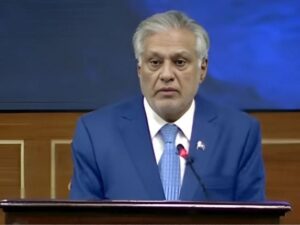
Pakistan is strategically positioned to emerge as a global mining powerhouse, says Deputy PM Ishaq Dar.
In his opening remarks, Deputy Prime Minister Ishaq Dar said the country was “strategically positioned to emerge as a global mining powerhouse,” citing its rich geological landscape and underutilised mineral resources. Deputy Prime Minister Ishaq Dar said Pakistan is strategically positioned to emerge as a global mining powerhouse, underpinned by its unparalleled geological wealth. He highlighted that Pakistan is home to monumental reserves like Reko Diq. He said Pakistan also hosts vast resources of rare earth elements, industrial minerals, non-metallics and gem stones including globally sought after peridote and emerald. The Deputy Prime Minister said with this vast untapped mineral potential, Pakistan’s resource corridor is poised to reshape global supply chains and attract foreign direct investment.
Ishaq Dar said the government has prioritized the strategic development of the mining sector through progressive policy reforms and investor centric initiatives, laying the foundation for a robust eco-system that delivers value for all stakeholders.
The Deputy Prime Minister said this investment forum provides a unique platform for stakeholders, partners and friendly countries to explore new prospects and build mutually beneficial partnerships.
Later participating in a discussion session, Minister for Commerce Jam Kamal emphasized that Pakistan is the destination for investment in the minerals. He said our resources are potentially so high that these will definitely attract a lot of investment and interest from local and foreign companies.
He highlighted that Pakistan is home to monumental reserves like Reko Diq. He said Pakistan also hosts vast resources of rare earth elements, industrial minerals, non-metallics and gem stones including globally sought after peridote and emerald.
The Deputy Prime Minister said with this vast untapped mineral potential, Pakistan’s resource corridor is poised to reshape global supply chains and attract foreign direct investment. Ishaq Dar said the government has prioritized the strategic development of the mining sector through progressive policy reforms and investor centric initiatives, laying the foundation for a robust eco-system that delivers value for all stakeholders.
The Deputy Prime Minister said this investment forum provides a unique platform for stakeholders, partners and friendly countries to explore new prospects and build mutually beneficial partnerships.
Later participating in a discussion session, Minister for Commerce Jam Kamal emphasized that Pakistan is the destination for investment in the minerals. He said our resources are potentially so high that these will definitely attract a lot of investment and interest from local and foreign companies. He said Pakistan was home to major deposits such as Reko Diq, as well as vast reserves of rare earth elements, industrial minerals, and globally sought-after gemstones like peridot and emerald.
Dar launched the National Minerals Harmonisation Framework 2025 at the event—an integrated reform initiative designed to attract investors and streamline policy in a sector that currently contributes just 3.2% to the national GDP.
“The mineral sector can redefine our economy, supply chains, and export profile,” Dar said. “We are laying the foundation of a robust ecosystem for stakeholders, including local and foreign partners.”
The forum, jointly supported by federal and provincial governments, also saw attendance from Prime Minister Shehbaz Sharif and Chief of Army Staff General Asim Munir—reflecting strong institutional support behind the reforms.
In a show of international interest, the United States was represented by Eric Meyer, Senior Bureau Official at the Bureau of South and Central Asian Affairs, while Saudi Arabia’s Vice Minister for Minerals expressed readiness to explore strategic cooperation.
Minister for Commerce Jam Kamal, speaking during a panel session, said Pakistan’s mineral potential could attract both regional and global attention if security and regulatory concerns were addressed.
“Balochistan can lead the way in this transformation,” he said. “Our resource base is substantial, and we’re ready to provide the necessary facilitation for investment.”
Kamal described investment in minerals as a long-term commitment, urging foreign companies to explore joint ventures and public-private collaborations that extend beyond extraction. U.S. companies are seeking to invest in Pakistan’s largely undiscovered minerals sector that boasts one of the world’s largest copper and gold deposits, the Pakistani government said Wednesday.
Sharif expressed Islamabad’s desire to strengthen ties with the Trump administration. Meyer’s visit marks the first by a Trump administration official since the U.S. imposed a 29% tariff on Pakistani exports as part of his trade war.
U.S. Senior Official Visits Pakistan to Boost Minerals Cooperation,Strengthen Economic and Security Ties.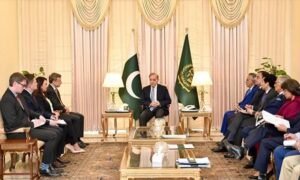
Eric Meyer, Senior Bureau Official for the U.S. Department of State’s Bureau of South and Central Asian Affairs, visited Islamabad April 8 and 9 to advance U.S. interests in Pakistan’s critical minerals sector, expand opportunities for U.S. businesses in Pakistan, deepen economic ties between the two countries, and underscore the vital importance of continued collaboration on counterterrorism.
On the margins of the Pakistan Minerals Investment Forum, Mr. Meyer highlighted support for investment in Pakistan’s minerals sector. “Critical minerals are the raw materials necessary for our most advanced technologies,” Senior Bureau Official Meyer said. “President Trump has made it clear that securing diverse and reliable sources of these materials is a strategic priority. Pakistan’s vast mineral potential—if responsibly and transparently developed—can benefit both our countries.” The United States continues to work with international partners and Pakistani stakeholders to explore opportunities for investment, technical collaboration, and responsible resource management in the minerals sector.
Eric Meyer, Senior Bureau Official for the State Department’s Bureau of South and Central Asian Affairs, conveyed that interest directly to Pakistan’s PM Shehbaz Sharif during a meeting in Islamabad, according to a government statement. The meeting came a day after Meyer attended the Pakistan Minerals Investment Forum, an international summit aimed at attracting foreign investment in the country’s mining sector. Apart from gold and copper, Pakistan is also rich in lithium used to make batteries, as well as other minerals.
The summit has drawn participation from major international companies, including Canada-based Barrick Gold, as well as government officials from the United States, Saudi Arabia, China, Turkey, the United Kingdom, Azerbaijan and other nations. Pakistan’s massive copper and gold deposits are located in Reko Diq, in Balochistan. He reaffirmed Washington’s interest in expanding bilateral cooperation, including in such sectors as trade, investment, and counterterrorism, the statement said. Sharif said Pakistan’s minerals sector offered “immense opportunities” and encouraged U.S. companies to take advantage of the investment potential.
Senior Bureau Official Meyer also met with senior Pakistani officials, including Chief of Army Staff Munir, Minister of Interior Mohsin Naqvi, and Minister of Petroleum Ali Perveiz Malik, to expand opportunities for American businesses in Pakistan, promote the deepening of economic ties between our two countries, and underscore the vital importance of continued collaboration on counterterrorism. During his visit, Mr. Meyer appreciated the opportunity to meet with Pakistani foreign policy thought leaders, members of the American chambers of commerce, and public diplomacy program alumni to strengthen the close and enduring people-to-people ties between our two countries.
Delegation lead by Barrick Gold’s CEO Mark Bristow meets with Prime Minister of Pakistan.
Bristow says, Reko Diq to transform Pakistan into top global mining jurisdiction. Reko Diq to become major contributor to Pakistan’s economy.
 “I am sure Reko Diq will be the beacon that leads Pakistan into the ranks of the top global mining jurisdictions.” He added that Reko Diq will be a major contributor to Pakistan’s economy, “and will have a transformative impact on the underdeveloped Balochistan province”. He said that in 2022 the reconstitution of Reko Diq project was completed. “Reko Diq today is a 50-50 partnership between the people of Pakistan and Barrick,” he said.
Barrick Gold owns a 50% stake in the Reko Diq mine and the governments of Pakistan and the province of Balochistan own the other 50%. Barrick considers the mine one of the world’s largest underdeveloped copper-gold areas, and its development is expected to have a significant impact on Pakistan’s struggling economy. Addressing the attendees, Bristow informed in 2024 the feasibility study of Reko Diq was completed, which revealed that the mines have 15 million tons of copper reserve and 26 million ounces of gold.
“This mine is set to become one of the lowest-cost copper producers in the world,” he said. “There is every reason to believe that Reko Diq will still be operati
ng past the end of this century.” He informed the first production is scheduled to commence in 2028 and targets 240,000 tons of copper per annum and 300,000 ounces of gold per annum. “It will grow to 400,000 tons per annum of copper and 500,000 per annum of gold during phase two,” he said.
Bristow said that apart from economic benefits, the mine would generate thousands of job opportunities. “During peak construction, Reko Diq is expected to employ more than 7,500 people. Once in production, it is expected to create approximately
4,000 direct long-term jobs,” he said, adding that Barrick prioritizes local employment. “I can say confidently that there is still so much more to explore and invest in Pakistan,” said Bristow, adding that his company is still finding porphyry bodies in Reko Diq. “Reko Diq is just a starter mine, there is lots more to come.”
Bristow said that the Pakistan Minerals Investment Forum marks the commencement of a brand-new mining frontier, “which is about to put Pakistan on the world stage when it comes to mining and its potential to compete against countries like Chile, Peru, DRC and Zambia”.
‘Incredible event’: Pakistan’s minerals summit attracts global investors.
Dave Williams, CEO of Mudex, an Australian drilling fluids company,
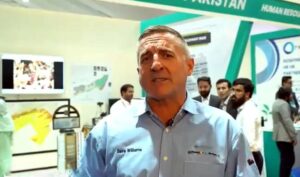 speaks during an interview in Islamabad, Pakistan, on April 8, 2025. Pakistan Minerals Summit held to attract foreign investment in country’s vast natural reserves estimated to be worth $6 trillion. Event saw participation from major international companies and government officials from US, China, Saudi Arabia and other nations. Major international companies from the US, Australia, South Africa and other nations have praised a global minerals summit hosted by Pakistan for opening up opportunities for investment in the country’s vast natural reserves, estimated to be worth $6 trillion.
The Pakistan Minerals Summit, aimed at attracting foreign investment in the country’s mining sector, saw participation from major international companies including Canada-based Barrick Gold and government officials from the United States, Saudi Arabia, China, Turkiye, the United Kingdom, Azerbaijan and other nations.
Pakistan is home to one of the world’s largest porphyry copper-gold mineral zones, while the Reko Diq mine in southwestern Balochistan province has an estimated 5.9 billion tons of ore. Barrick Gold, which owns a 50 percent stake in the Reko Diq mines, considers them one of the world’s largest underdeveloped copper-gold areas, and th
eir development is expected to have a significant impact on Pakistan’s struggling economy. But despite rich reserves of salt, copper, gold and coal, Pakistan’s mineral sector co
ntributes only 3.2 percent to GDP and 0.1 percent to global exports. The country is now aiming to tap into this underutilized potential.
“This is really a great event so far for me. I’m meeting some great people, learning about the culture and the event is probably one of the best events we’ve
been to recently,” Dave Williams, the CEO of Mudex, an Australian drilling fluids company, said
in an interview to Radio Pakistan. Mudex is based in Perth, specializing in the production and supply of environmentally friendly drilling fluids for industries such as mining, civil construction, water wells and horizontal directional drilling. Founded in 2014, Mudex offers a wide range of drilling fluid products including viscosifiers, lubricants, fo
aming agents and lost circulation materials. “The networking and all have been really good … Being able to understand the immensity of the work that is happening in Pakistan at the moment,” the Mudex CEO said about the minerals summit.
Minister for Petroleum Ali Perveiz Malik, announced that the forum is aimed at highlighting the investment potential in Pakistan’s mineral resources and around 300 participants from different countries including Turkiye, China, Azerbaijan, Saudi Arabia, the US, Denmark, Finland, Kenya and the UK have participated at the forum. The forum held important sessions on investment opportunities in major mineral projects, including the Reko Diq mine, and discussions were carried out on the government’s policies aimed at boosting the mineral sector.
Thanks to Allah the delegates acknowledged the potential of Pakistan’s mineral sector,” adding that international companies are interested in exploring investment opportunities.


